
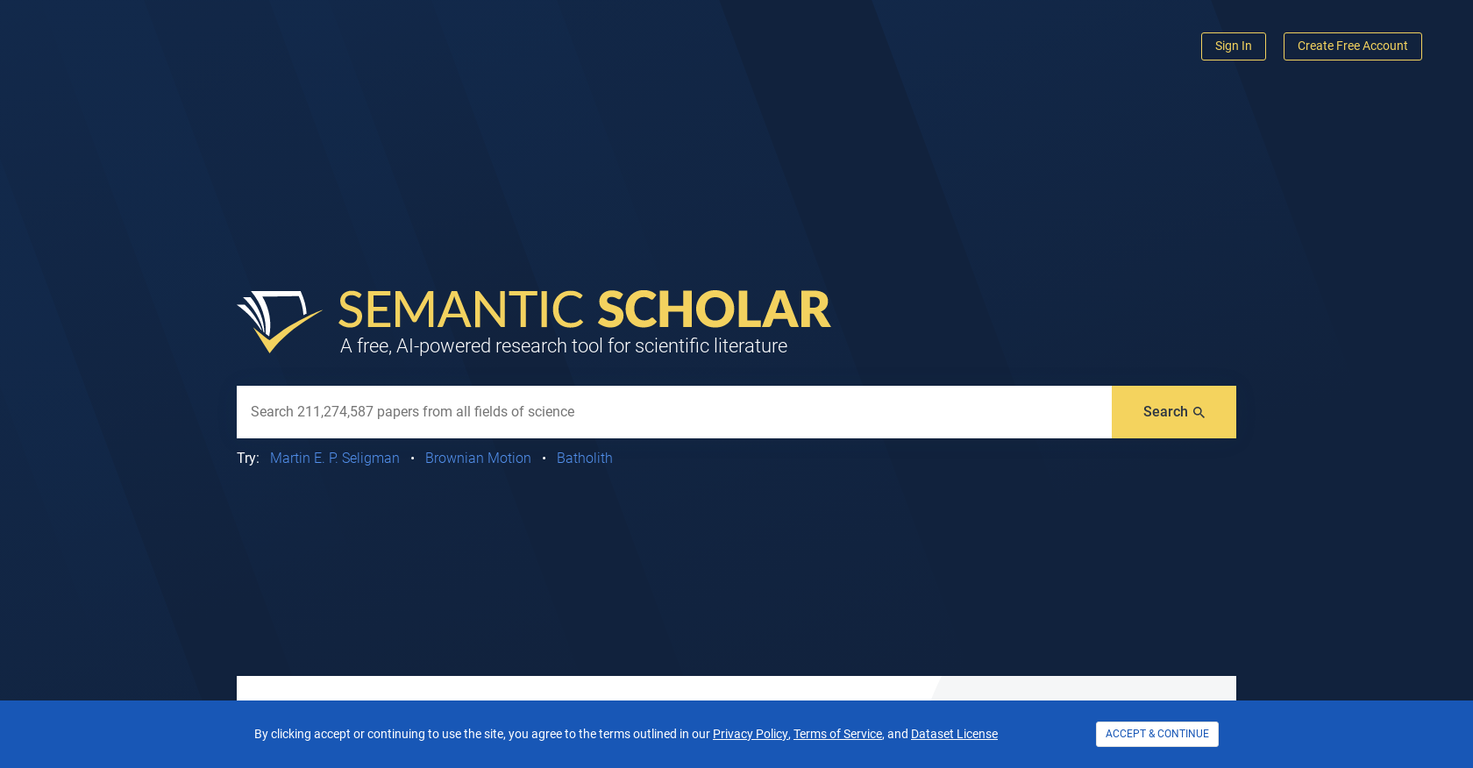
Overview
Semantic Scholar is a free AI-powered research tool that aggregates scientific literature from various fields of science, including nanotechnology and moral reasoning, and uses AI and engineering to understand the semantics of the research to help scholars discover relevant publications.The platform currently archives over 211 million papers. Also, the tool has a beta program, Semantic Reader, that provides an augmented reading experience to help increase accessibility and richness to scientific literature.Besides, Semantic Scholar has a newly improved API for developers, which allows searching for papers on the platform, better documentation, and improved stability.Semantic Scholar was developed by the Allen Institute for AI, which focuses on creating efficiency in AI research to decrease carbon footprint and increase inclusivity.Researchers who use Semantic Scholar can sign up and stay connected to receive alerts about relevant papers, as well as receive updates about new features and releases.The platform is open to publishers who want to contribute their research, and a team of expert researchers composes the Semantic Scholar team. The platform also offers a detailed FAQ section and tutorials to help users understand the tool's full range of capabilities.Overall, Semantic Scholar is a highly useful research tool for scholars, allowing them to discover relevant scientific publications with the power of AI.
Pros and Cons
Pros
- Aggregates scientific literature
- Covers various science fields
- Archives over 211 million papers
- Includes Semantic Reader for augmented reading
- Improved API for developers
- Better documentation
Cons
- Limited to scientific literature
- No offline access
- No language translation options
- Requires sign up for alerts
- Specific API requirements
- Beta features might be unstable
Categories
- Primary: Personal
- Secondary: Education
- Specialty: Academic research
Community Feedback
Only the latest comments are shown.easy to pick up and you get a few free file imports. it gives you results pretty fast, unfortunately i can't find a way to get back to these, they're locked behind the paid service.
I've tried to find the exact articles via WoS, Google, or Scopus. Despite using a very advised and complicated search query, it was just a waste of time. Perplexity didn't help either. The Jenni AI, which may add useful links when generating text, finds nothing but trash. SciScape gave exactly what I needed from the first query! A couple of fresh relative articles with very exact topics!
Such an impressive platform for all of us who are looking for more efficient ways to do the investigation. OpenRead has the potential to solve our problems.